Can A Pre-Christian Version of the Book of Revelation Be Recovered?
James Tabor examines embedded texts within early Christian literature
This article was originally published on Dr. James Tabor’s popular Taborblog, a site that discusses and reports on “‘All things biblical’ from the Hebrew Bible to Early Christianity in the Roman World and Beyond.” Bible History Daily originally republished the article on October 24, 2013 with consent of the author. Visit Taborblog today, or scroll down to read a brief bio of James Tabor below.
In my recent post on the destruction of Pompeii by the volcanic eruption of Mount Vesuvius in 79 CE I suggested that one of the authors/editors of the New Testament Book of Revelation was reacting to this specific disaster and giving it an apocalyptic interpretation in the materials we now find in chapter 18–the “Fall of Babylon the Great.”
One of the areas of study I have specialized in over the past three decades is the phenomenon of ancient and modern apocalypticism–namely those systems of thinking about the future in which an imminent “end of the age” is contemplated. I have published widely on this subject, from the Dead Sea Scrolls, to Jesus as an apocalyptic messiah, to David Koresh and Waco.1
 Last Spring (2012) I taught an advanced graduate course on “Embedded Texts” that dealt with the Book of Revelation among other New Testament materials. Here is the course description.
This semester’s topic is Embedded Texts and Ur-Texts within Early Christian Literature. How does one identify and date “embedded texts” in early Christianity? What are the methods and assumptions involved in positing strata of textual traditions within a finished work? Texts examined will be the so-called Q and L sources in the Gospel of Luke, Ur-sources in Acts, the ‘signs’ source in John, and a possible pre-Christian Jewish apocalypse in the Book of Revelation. The focus of this course is on method – therefore it is targeted to a wider audience beyond those interested in specializing in early Christianity since the phenomenon of layered texts is ubiquitous in many religious traditions.
In considering the possibility of a “pre-Christian” apocalypse embedded in our current Book of Revelation we began with the very informal and preliminary work I had done years ago inspired by my former colleague at the University of Notre Dame, Josephine Masssyngberde Ford, in her volume on Revelation in the Anchor Bible Commentary series (now Anchor Yale Bible Commentary, edited by J. J. Collins).2
Although colleagues have been fairly critical of Ford’s work in this volume, and particularly her claim that the Book of Revelation can be traced back to pre-Christian John the Baptizer circles, with links to Qumran and the DSS, I have found her basic insights quite compelling and I highly recommend my readers get a copy of this volume. It is truly a wealth of research and information.3

Easter: Exploring the Resurrection of Jesus
In this free eBook, expert Bible scholars offer in-depth reflections on the resurrection.
I hope to publish with permission some of the results of our work in the seminar on the Book of Revelation in several upcoming posts on this blog. The assignment was a bold one: By careful “reverse editing” see if you can produce a version of what an earlier non-Christian Jewish apocalypse might have looked like.
One thing I had noticed in my own work on the Book of Revelation over the years was that the explicit references to either “Jesus” “Christ,” or “Jesus Christ” outside the letters to the churches of chapters 2 & 3 are mostly clustered in chapters 1 and 22, with few in the middle chapters.
But what is even more astounding, to me at least, was the observation that nearly all of these references can be easily removed without detracting in any way from the structure or flow of the passages in which they occur. In other words, one could get the distinct impression that references to Jesus Christ lay quite lightly on the text and could even be seen as secondary interpolations.
In the references below I have put these interpolative elements bold italicized brackets. This exercise strongly suggests that these are later additions to an original Jewish text inserted to “Christianize” a book that in its origins had nothing to do with Jesus. This is a rather astounding phenomenon and once one sees it it seems clear that the underlying original text remains intact and makes complete sense without these references:
Rev 1:1 The revelation [of Jesus Christ,] which God gave [him] to show his servants what must soon take place; he made it known by sending his angel to his servant John,
2 who testified to the word of God [and to the testimony of Jesus Christ,] even to all that he saw.
3 Blessed is the one who reads aloud the words of the prophecy, and blessed are those who hear and who keep what is written in it; for the time is near.
4 John to the seven churches that are in Asia: Grace to you and peace from him who is and who was and who is to come, and from the seven spirits who are before his throne,
[5 and from Jesus Christ, the faithful witness, the firstborn of the dead, and the ruler of the kings of the earth. To him who loves us and freed us from our sins by his blood,
6 and made us to be a kingdom, priests serving his God and Father, to him be glory and dominion forever and ever. Amen.]
Rev 1:9 I, John, your brother who share with you [in Jesus] the persecution and the kingdom and the patient endurance, was on the island called Patmos because of the word of God [and the testimony of Jesus.]
NRS Rev 11:8 and their dead bodies will lie in the street of the great city that is prophetically called Sodom and Egypt, [where also their Lord was crucified.]
Rev 12:17 Then the dragon was angry with the woman, and went off to make war on the rest of her children, those who keep the commandments of God [and hold the testimony of Jesus.]
Rev 14:12 Here is a call for the endurance of the saints, those who keep the commandments of God [and hold fast to the faith of Jesus.]
FREE ebook: Jerusalem Archaeology: Exposing the Biblical City Read about some of the city’s most groundbreaking excavations.
Rev 17:6 And I saw that the woman was drunk with the blood of the saints [and the blood of the witnesses to Jesus.] When I saw her, I was greatly amazed.
Rev 19:10 Then I fell down at his feet to worship him, but he said to me, “You must not do that! I am a fellow servant with you and your comrades [who hold the testimony of Jesus.]Worship God! [For the testimony of Jesus is the spirit of prophecy.“]
Rev 20:4 Then I saw thrones, and those seated on them were given authority to judge. I also saw the souls of those who had been beheaded [for their testimony to Jesus and] for the word of God. They had not worshiped the beast or its image and had not received its mark on their foreheads or their hands. They came to life and reigned [with Christ] a thousand years.
Rev 22:16 [“It is I, Jesus, who sent my angel to you with this testimony for the churches. I am the root and the descendant of David, the bright morning star.”]
Rev 22:20 The one who testifies to these things says, “Surely I am coming soon.” Amen. [Come, Lord Jesus]
Rev 22:21 [The grace of the Lord Jesus be with all the saints. Amen.]
The remaining references to the “Lord” or to the “Messiah,” such as those in 11:15, 12:10, and 20:6, are generic and fit easily into the thought world of generic late 2nd Temple Jewish apocalypticism, with nothing implicitly “Christian,” while the reference to “the Lamb” that is slain fits well into the generic image of the suffering “Son of Man,” returning triumphantly in the clouds of heaven, taken from Daniel 7:13-14, where it is understood to be the corporate people of the “saints of the Most High,” as well as the corporate nature of the “Suffering Servant” in the four “Servant Songs” of Isaiah (42:1-4; 49:1-6; 50:4-11; 52:13-53:12
In contrast to these references to Jesus, that so clearly exhibit a heavy hand of Christian interpolation, one finds multiple references to the LORD (Yahweh/Yehovah) God Almighty, as well as “his Messiah,” that echoes closely the language of the prophetic texts of the Hebrew Bible. None of these contain explicit references to Jesus and clearly exhibit a textual integrity that reflects the language and thought world of pre-Christian thoroughly Jewish apocalypticism:
Rev 1:8 “I am the Alpha and the Omega,” says the LORD God, who is and who was and who is to come, the Almighty.
Rev 4:8 And the four living creatures, each of them with six wings, are full of eyes all around and inside. Day and night without ceasing they sing, “Holy, holy, holy, LORD God the Almighty, who was and is and is to come.”
Rev 4:11 “You are worthy, our LORD and God, to receive glory and honor and power, for you created all things, and by your will they existed and were created.”
Rev 6:10 they cried out with a loud voice, “LORD LORD, holy and true, how long will it be before you judge and avenge our blood on the inhabitants of the earth?”
Rev 11:4 These are the two olive trees and the two lampstands that stand before the LORD of the earth.
Rev 11:17 singing, “We give you thanks, LORD God Almighty, who are and who were, for you have taken your great power and begun to reign.
Rev 15:3 And they sing the song of Moses, the servant of God, and the song of the Lamb: “Great and amazing are your deeds, LORD God the Almighty! Just and true are your ways, King of the nations!
Rev 15:4 LORD, who will not fear and glorify your name? For you alone are holy. All nations will come and worship before you, for your judgments have been revealed.”
Rev 16:7 And I heard the altar respond, “Yes, O LORD God, the Almighty, your judgments are true and just!”
Rev 18:8 therefore her plagues will come in a single day — pestilence and mourning and famine — and she will be burned with fire; for mighty is the LORD God who judges her.”
Rev 19:6 Then I heard what seemed to be the voice of a great multitude, like the sound of many waters and like the sound of mighty thunder peals, crying out, “Hallelujah! For LORD our God the Almighty reigns.
Rev 21:22 I saw no temple in the city, for its temple is LORD God the Almighty [and the Lamb.]
Rev 22:5 And there will be no more night; they need no light of lamp or sun, for the LORD God will be their light, and they will reign forever and ever.
Rev 22:6 And he said to me, “These words are trustworthy and true, for LORD, the God of the spirits of the prophets, has sent his Messenger to show his servants what must soon take place.”
The implications of this simple textual examination are quite profound. First, it appears that one can fairly easily recover a pre-Christian version of this text, more or less, with very little change to the underlying text itself. What this would then allow is a re-reading of the book as a whole, with its references to the “Beast,” the “False Prophet” and “Babylon” in a pre-70 CE setting. Scholars have most often applied the basic setting of the book to the reigns of the Roman emperors Nero and Domitian, with several stages of redaction in the period from 68 to 100 CE. However, since Rev 11:15 appears to be a clear reference to the city of Jerusalem, not Rome, as “Sodom and Egypt,” an entirely different line of interpretation opens up. The perspective of the authors of this primitive Ur-text of the Apocalypse is a radical disenfranchisement from the authority structures of pre-70 CE Roman destruction Jerusalem, whom they consider agents of the “Beast.” Further, the martyrs in this Ur-text are the “two witnesses,” whose slain bodies are left in the streets of Jerusalem, not Jesus the crucified messiah.
I am convinced that in the same way the basic apocalyptic texts of the Dead Sea Scrolls have as their historical reference points the parties and politics of the mid-1st century BCE, the Ur-text of revelation is most likely composed against the backdrop of local events in Judea in the 40s and 50s CE–and has little to do with Rome and its emperors.
The text, of course, has an ongoing history, certainly through the reign of Domitian and the destruction of Pompei by the volcanic eruption of Mount Vesuvius in the summer of 79 CE. I have also come to the view quite recently, after visiting and studying Pompeii that Revelation 18 is a fairly direct reaction to the volcanic eruption of Vesuvius–imagined by the author to be a precursor to the destruction of Rome itself.
Notes:
1. See my article “Ancient Jewish and Early Christian Millennialism” in Oxford Handbook of Millennialism, ed., Cathy Wessinger. At the turn of the millennium–remember the Y2K panic?–I published “Why 2K?: The Biblical Roots of Millennialism” in Bible Review, which offers an overview of Christian apocalypticism through the ages. There is also “Apocalyptic Schemes and Dreams: How An Ancient Jewish Vision of the Future Came to Dominate the Modern World” in The End of Days?: Millennialism from the Hebrew Bible to the Present, edited by Leonard J. Greenspoon and Ronald A. Simkins (Omaha: Creighton University Press, 2003), pp. 49-61. On the Dead Sea Scrolls and Jesus as an apocalyptic figure of the late 2nd Temple Jewish period, see: “Standing in the Shadow of Schweitzer: What Can We Say about an Apocalyptic Jesus?” The Review of the Committee for the Scientific Examination of Religion 2:1 (2007): 8-10; my paper “One, Two, or Three Messiahs: Dynastic and Priestly Pedigrees from the Maccabees to Masada,” the overview “What the Bible Really Says About the Future” in What the Bible Really Says, edited by Morton Smith and Joseph Hoffmann, and of course my book, The Jesus Dynasty.
2. I began my teaching career at Notre Dame in 1979.
3. I might also recommend here G. R. Beasley-Murray, “How Christian is the Book of Revelation?”
 Dr. James Tabor recently retired (2022) from the Department of Religious Studies at the University of North Carolina at Charlotte where he was professor of Christian origins and ancient Judaism and served as Chair for more than ten years. Since earning his Ph.D. at the University of Chicago in 1981, Tabor has combined his work on ancient texts with extensive field work in archaeology in Israel and Jordan, including work at Qumran, Sepphoris, Masada, Wadi el-Yabis in Jordan. He has teamed up with with Shimon Gibson to excavate the “John the Baptist” cave at Suba, the “Tomb of the Shroud” discovered in 2000, Mt Zion and, along with Rami Arav, he has been involved in the re-exploration of two tombs in East Talpiot including the controversial “Jesus tomb.”
Tabor is the author of the popular Taborblog, and has been featured in Bible History Daily as well as the Huffington Post. He is the author of many books with his newest book, The Lost Mary: From the Jewish Mother of Jesus to the Virgin Mother of God, due out in English from Knopf in 2023. He is currently working on two new books: Jesus Betrayed: How Christianity Lost its Way and Prophecy Belief in MAGA America: Shifting Biblical Interpretations and Why They Matter.
Related Posts


Must-Read Free eBooks
Want more Bible history?
Sign up to receive our email newsletter and never miss an update.
Unlock Unlimited Access to the Bible's Past

Unlock Unlimited Access to the Bible's Past
Become an All-Access Member to explore the Bible's rich history. Get Biblical Archaeology Review in print, full online access, and FREE online talks. Plus, enjoy special Travel/Study discounts. Don't miss out—begin your journey today!

I stopped thinking of Revelation as a book primarily written as early Christian apocalyptic when I stumbled on the detailed table called “Old Testament and Other Texts Alluded to in Revelation,” which sits at the very end of the commentary by Christopher C. Rowland in Volume 12 of The New Interpreter’s Bible (Nashville: Abingdon Press, 1998).
I agree that “nearly all of these references [to ‘Jesus,’ ‘Christ,’ or ‘Jesus Christ’ in the middle chapters of Reveation] can be easily removed without detracting in any way from the structure or flow of the passages in which they occur.”
After reading and hearing many analysies of Revelation I’ve reached the conclusion that regardless of when it was written it it not intended as a literal “end of times” story. Instead, each believer is to be alert to the evil one that he or she personally encounters and to have faith that the Almighty will sustain the believer who “keeps his/her eyes on the hereafter.” Thus every generation faces a “beast” and an “antichrist” during their lifetime. Today’s “evil one” is avarice and the accumulation of personal wealth, but sometimes the ‘evil one” is a real person, and may have been the Emperor Nero in the mid 1st century just as Hitler was in the mid 20th century.
Unlike the above reply, I believe it to be a literal ‘end times’ story. I don’t believe that the removal of Christ from the text is a wise interpretation, therefore futile and serves no purpose. You can imagine peoples of any age at almost any time thinking that their time ‘was it!’ I don’t understand what you wish to learn by removing the Centerpiece of Scripture.
The first instance of the Book of Revelation Historically;
We will not, however, incur the risk of pronouncing positively as to the name of antichrist; for if it were necessary that his name should be distinctly revealed in this present time, it would have been announced by him who beheld the apocalyptic vision. For that was seen no very long time since, but almost in our day, towards the end of
Domitian’s reign.
~Saint Irenaeus Against Heresies (Book V, Chapter 30:3)
The Book of Revelation in the Bible today can be dated to after 164 CE, while parts of it date to 59 CE.
The Solar eclipse over Cyprus and Patmos in Chapter 1 happened on April 30, 59 CE. Anyone with astronomy freeware/shareware can see this. It happens next to the Pleiades (seven sisters).
12 And I turned to see the voice that spake with me. And being turned, I saw seven golden candlesticks;
13 And in the midst of the seven candlesticks one like unto the Son of man, clothed with a garment down to the foot, and girt about the paps with a golden girdle.
14 His head and his hairs were white like wool, as white as snow; and his eyes were as a flame of fire;
15 And his feet like unto fine brass, as if they burned in a furnace; and his voice as the sound of many waters.
16 And he had in his right hand seven stars: and out of his mouth went a sharp twoedged sword: and his countenance was as the sun shineth in his strength.
John of Patmos goes on to interpret the vision, which is beyond my scope. This is just
pointing out the vision itself.
20 The mystery of the seven stars which thou sawest in my right hand, and the seven golden candlesticks. The seven stars are the angels of the seven churches: and the seven candlesticks which thou sawest are the seven churches.
The Pleiades, are on the right side of the eclipse.
The virgin with a crown of 12 stars describes the solar eclipse over Patmos and Cypress on September 4, 164 CE. Using astronomy software we see this solar eclipse happens directly in Virgo with the multi headed Hydra right there covering 1/3 of the Universe.
In the twelfth chapter of the Book of Revelation we’re told that a woman is clothed in the
sun with the moon as its footstool. She wears a crown of twelve stars.
Revelation 12
1 And there appeared a great wonder in heaven; a woman clothed with the sun, and the moon under her feet, and upon her head a crown of twelve stars:
2 And she being with child cried, travailing in birth, and pained to be delivered.
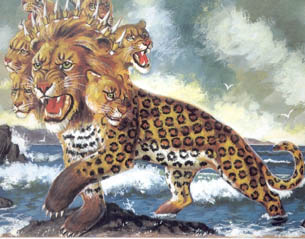
3 And there appeared another wonder in heaven; and behold a great red dragon, having seven heads and ten horns, and seven crowns upon his heads.
4 And his tail drew the third part of the stars of heaven, and did cast them to the earth: and the dragon stood before the woman which was ready to be delivered, for to devour her child as soon as it was born.
5 And she brought forth a man child, who was to rule all nations with a rod of iron: and her child was caught up unto God, and to his throne.unto God, and to his throne.
It becomes the Virgin Mary with child and the multi-headed beast (Herod) waiting for the child to be delivered as in Matthew’s gospel.
I am grateful to Prof Tabor for opening my eyes to a new way of understanding the curious book of Revelation. It is certainly an interesting hypothesis and one that deserves to be taken seriously. I would myself also regard the letters to the Churches as Christian interpolation. They clearly do not fit with the rest of the text.
Swede says:
This report SHALL be used in my classes in NT and OT Textual Criticism as a classic example of:
” How Textual Criticism Is Done By An Unbeliever”. Thanks for your information.
I fully agree with the apostle Peter in ll Peter 1:16 a ,who was personally taught by Christ, that “We have not followed cunningly devised fables ..”Or as it says in Greek “myths”; for surely this liberal scholar’s treatise is of this kind- a myth-as it concerns Revelation-that Peter was writing about.
He also wrote that “There was false prophets among the people just as there will be false teachers among you[Christians-the church!]…”ll Peter 2:1 a Paul says in the last days they will heap up teachers to themselves..”
Revelation is well detailed like other apocalyptic writings composed while the temple stood in Jerusalem during the first century (Book of Enoch, Apocalypse of Abraham, Ascension of Isaiah), and understanding it requires a grasp of the Old Testament which the early Christians relied on. In an essay by Jaan Puhvel called “Names and Numbers of the Pleiad,” the Hittites refered to the Pleiades as IMIN, meaning ‘seven,’ and is also written as IMIN IMIN, or ‘seven seven’. The same Anatolian tradition is paralleled in Revelation 1:20 as seven stars and seven lampstands. This could slso be the mystery of the jubilee of Leviticus 25:10 which pertains to the 50th year when liberty is proclaimed after the completion of 49 (7×7). The Babylonian god Marduk nad 50 names and in the creation epic “Emuna Elish,” Marduk is a shepherd who guides the stars and posesses the tablets of fate, having wrested it from Kingu, who marched with the tablets before the advancing rebellious Tiamat. One of the weapons in his battle against the monsters was a net, and that’s sort of the description we get in Job 38:31, “Can you fasten the harness of the Pleiades?” This jives with the designation for the Pleiads in Sanskrit which means “spun mesh, wickerwok” and Persian as well as Greek-Iranian designations for the Pleiades as “sieve.”
The significance of the Pleiades being young stars born out of the remains of former stars has parallels in the Bereshith Rabba, section 9, where Rabbi Abbahu “deduced from Ecclesiastes 3:11 that ‘God created and desroyed worlds before creating this one; He said, these please me, those do not please me,’ Here the motif of the worlds that succeed our creation is combined with that of previous worlds, a motif that also plays a role in the doctrine of the shemittah” (Origins of the Kabbalah, by Gershom Scholem, p.466).
In the Kabbalah, God’s attribute of “Binah” or Understanding is the eternal womb of creation, as it is written, “For you shall call Understanding a Mother” (Proverbs 2:3).
“After 49,000 years, in the ‘great jubilee year,’ the entire creation returns to its origin in the womb of binah, the ‘mother of the world,’ just as according to the biblical ordinance concerning the jubilee year, after fifty years ‘liberty is proclatmed throughout the land,’ and all things return to their origional owner” (Origins, p.463).
Actually it was the Tablet of Fate, singular. that Marduk usurped from the god Enlil along with many attributes taken from other older gods. The city of Babylon (circa 13th century B.C.E.) elevated Marduk to universal status and since southern Mesopotamia is where many popular beliefs originated, the Babylonians could at least exert a cultural influence on its neighbors like the Assyrians who had an economic and military advantage, especially since the Babylonian god Marduk had the Tablet of Fate.
.The Hittite word for the Pleiades, IMIN, has Sumerian origins and is written as IMIN.BI or “the seven” and is also written as “seven and seven.” Puhvel’s essay mentions that we don’t know if the Hittites concieved of the Pleiades as a wickerwork sieve but that there is a mysterious reference to a “sieve of a thousand holes (literally ‘eyes’) in the Telipinus myth. A goddess uses this for the god Telipinus as part of a ritual purification to cure his anger management problem:
“I want to fix long days for Telipinus. I have taken death, one thousand eyes” (The Ancient Near East, Vol. 1, An Anthology of Texts and Pictures, by James Pritchard, p.90).
It’s like looking at a photographic negative of the cluster of stars that appear as holes in a sieve, and this what “binds the Pleiads.”
Compare Job 38:31 with Matthew 16:19:
Can you tie cords to the Pleiads?
Whatever you my bind on earth will be the thing bound in the heavens.
Or undo the reigns of Orion?
Whatever you may loose on the earth will be the thing loosed in the heavens.
And lets not forget how Akhenaten was greeted in the Amarna Letters from the leader of Jerusalem.
Say to the king, my lord: Message of Abdi-Heba, your servant. I fall at the feet of my lord 7 times and 7 times. … EA 287.[6]